Enhancing Medical Visualization and Display Connectivity—Part 1: GMSL Technology
July 09, 2026
Blog
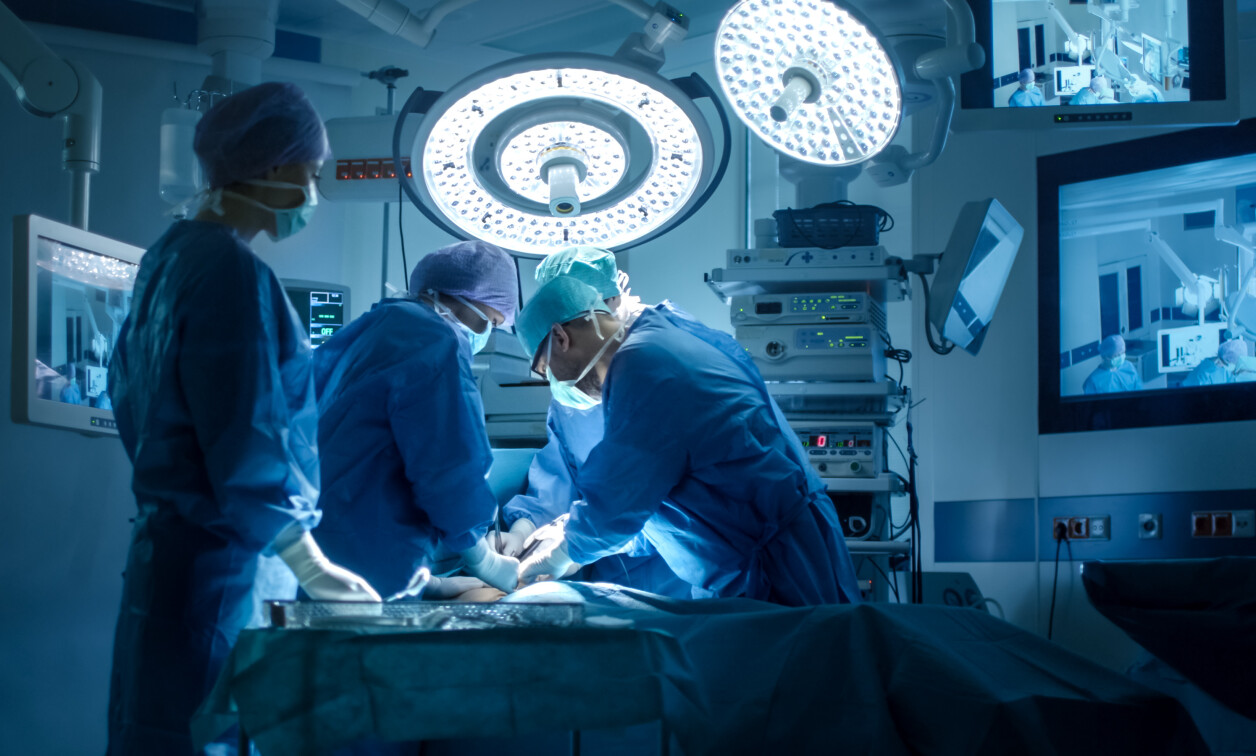
The growing demand for high-resolution cameras and displays in surgical and acute care settings is driven by the need for greater visual precision, enabling clinicians to make faster, more accurate decisions during procedures. These technologies are also being designed with clinician comfort and usability in mind, reducing fatigue during lengthy surgeries and ensuring seamless integration into daily practice. This article is the first in a series exploring technologies for medical visualization and display connectivity, with each installment focusing on key innovations that enhance image quality, system integration, and patient safety. Analog Devices’ Gigabit Multimedia Serial Link™ (GMSL) technology addresses this need by enabling transmission of uncompressed video, control signals, and power over a single cable, simplifying system design and improving reliability. This article explores the application of GMSL in endoscopic imaging, surgical displays, and patient care equipment, highlighting its benefits in bandwidth, power efficiency, and integration.
Introduction
Hospitals are increasingly investing in digital healthcare infrastructure to improve patient outcomes, streamline workflows, and support data-driven clinical decision-making, a trend accelerated by the pandemic and now shaping the future of care delivery. Within this context, the use of high-resolution medical displays is expanding to support diagnostics, monitoring, and intraoperative visualization. At the same time, the rapid growth of minimally invasive and robotic-assisted surgery is driving increased adoption of high-performance surgical cameras. Robotic-assisted surgery alone is expected to triple in market size, reaching $27.1 billion by 2030, with over 2,100 surgical robot units deployed worldwide.1
These procedures rely on advanced imaging for visualization, precision, and control, with 4k resolutions, 3D imaging, and robotic integration becoming standard in operating rooms. As imaging capabilities advance, so too must the connectivity solutions that support them. Reliable, low-latency transmission of uncompressed video and control data is essential to fully realize the benefits of modern imaging systems. This article introduces Gigabit Multimedia Serial Link™ (GMSL) technology as a scalable, unified solution for camera and display connectivity in next-generation medical devices.
System-Level Needs for a Modern Endoscope Design
Endoscope system designers face increasing system-level challenges driven by the demand for richer, more immersive imaging. The push toward higher video resolutions, faster frame rates, and multisensor configurations is dramatically increasing the volume of data generated by the camera unit.
Take, for example, a 4k60 camera system, which can generate upwards of 10Gbps of video data. Dual-camera systems, such as those shown in Figure 1, are now commonly used in stereoscopic 3D or near-infrared (NIR) fluorescence imaging, which can increase the volume of data 2× to 4× beyond this.
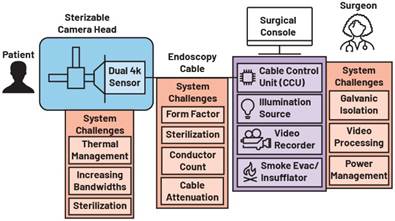
Figure 1. System architecture and challenges of an endoscopy system.
Designers face signal attenuation and form factor challenges when transferring this vast body of data from the camera unit across several meters of cable to the surgeon’s console. Scaling the camera connectivity architecture for higher throughput typically requires a higher clock rate or more parallel data lanes across the cable. However, form factor limitations in the cables and increased cable attenuation at higher bandwidths make both approaches troublesome. Power consumption must also be tightly controlled to avoid the handpiece heating during use, which is critical for both patient safety and surgeon comfort.
In procedures with elevated infection risk such as bronchoscopy and urology, the growing adoption of single-use endoscopic instruments is another noticeable trend.2 While disposability improves workflow efficiency and reduces cross-contamination, it also imposes strict cost and integration constraints, reshaping system design priorities. Traditional FPGA-based end processing solutions are often too expensive for scalable, disposable designs, and multiconductor cables with complex connectors significantly inflate the bill of materials (BOM). These factors make it challenging to deliver high-performance imaging in a cost-effective, compact, and sterilization-friendly form factor.
In addition to data throughput and thermal constraints, endoscopic systems must meet stringent electrical isolation requirements to ensure patient safety and comply with medical standards such as IEC 60601-1. Transferring multi-gigabit video streams from CMOS image sensors across an isolation barrier presents a significant engineering challenge. Achieving robust isolation of camera interfaces is a critical design consideration that will be explored in detail in Part 2 of this series.
GMSL: Streamlining Connectivity for Surgical Visualization
Analog Devices’ GMSL technology, shown in Figure 2, directly addresses these camera and display connectivity challenges, offering a robust, scalable, and low-power connectivity solution for modern medical equipment. Developed for automotive applications, GMSL has been widely adopted across advanced driver-assistance systems (ADAS) and in-vehicle infotainment, where its high bandwidth, low latency, and reliability are critical. The technology enables transmission of uncompressed video, control signals, and power over a single coaxial or shielded twisted pair (STP) cable, dramatically simplifying system design while maintaining signal integrity across long, flexible, sterilization-ready cables.
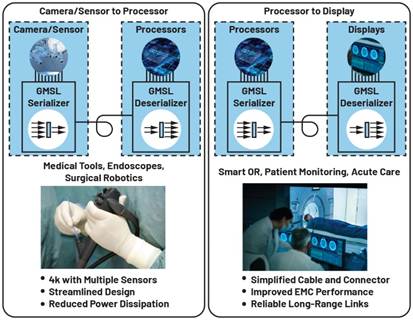
Figure 2. GMSL in medical devices and the healthcare setting.
Camera Connectivity for Endoscopy and Surgical Visualization
GMSL technology is well-suited for interfacing with CMOS image sensors that use the MIPI CSI-2 interface. The architecture supports a range of single and multisensor imaging modalities, including RGB sensors for high-fidelity color imaging, NIR sensors for fluorescence-based visualization, and stereoscopic sensors for 3D depth perception.
The GMSL link supports scalable bandwidths of 6Gbps or 12Gbps per link, enabling high-resolution, high-frame rate video transmission from single or multisensor configurations. A single coaxial or STP cable is used to transmit video, power, and control signals, reducing cable form factor and connector complexity.
By replacing traditional FPGA-based end processing implementations, GMSL significantly reduces power consumption and thermal load in the handpiece. This not only supports the viability of single-use instruments but also improves thermal comfort for the surgeon.
GMSL is well-suited for endoscopic imaging systems, where high-speed data transmission must remain reliable despite constant cable motion, tight bend radii, and exposure to repeated sterilization cycles. ADI’s patented adaptive equalization continuously adjusts in real time to preserve signal integrity as endoscope cables age with use.
Control interfaces such as UART, I2C, and SPI can be tunneled over the GMSL link to minimize conductor count and cable diameter, enabling configuration of the image sensor and management of peripherals such as lens drivers, illumination circuits, secure memory, and environmental sensors. The system also supports reference clock over reference channel (RoR), allowing the image sensor’s reference clock to be transmitted over the same cable. This eliminates the need for a crystal oscillator in the handpiece, further simplifying the design.
GMSL transmits uncompressed video with microsecond latency, meeting the stringent timing requirements of surgical robotics and real-time visualization systems. The use of uncompressed data also ensures full fidelity input for emerging AI-based algorithms used in surgical guidance and diagnostics. Automotive-grade robustness features, including cyclic redundancy check (CRC) and error checking, help maintain data integrity under demanding operating conditions.
Example System Architecture for Endoscopic Imaging
A typical GMSL-based endoscopic imaging system places the GMSL serializer directly in the handpiece, interfacing with a MIPI CSI-2 CMOS image sensor. This serializer converts high-speed image data into a robust GMSL stream for transmission over a single coaxial or STP cable to the GMSL deserializer located in the surgical cart or console. The MIPI CSI-2 interface can be galvanically isolated in the surgical console to provide the required safety. This topic will be explored in detail in Part 2.
This architecture, shown in Figure 3, offers several key advantages:
- Simplified camera design: Supports single-use instruments through elimination of an FPGA used in traditional edge processing solutions, creating a more compact, thermally efficient, and economical design.
- Reduced cable complexity: A single lightweight cable carries video, power, and control signals, minimizing the number and diameter of conductors and reducing connector size and weight. Adaptive equalization maintains signal integrity over the cable length.
- Scalable performance: The architecture supports higher resolutions, frame rates, and multisensor configurations. For even greater bandwidth, a dual GMSL serializer setup can be used.
- Lower power consumption: Replacing the FPGA and much of the supporting circuitry reduces heat generation in the hand-piece, improving system efficiency and ensuring comfort for the surgeon during prolonged procedures.
- Peripheral integration: The GMSL link supports sideband protocols (UART, I2C, SPI), enabling control of lens drivers, illumination sources, and secure authenticators, while providing a platform to communicate with future sensing modalities.
- Sterilization ready: The simplified cable and connector design is well-suited for autoclavable instruments, which, combined with adaptive equalization, ensures long-term reliability in clinical environments.
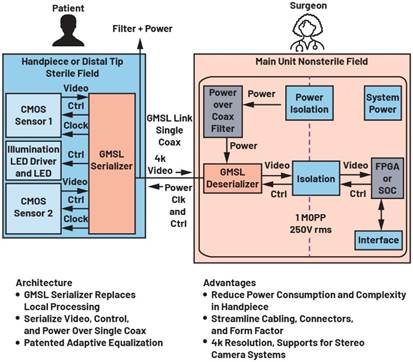
Figure 3. Endoscopy architecture with GMSL.
This architecture is particularly well-suited for laparoscopy, bronchoscopy, and urology instruments using a MIPI CSI-2 CMOS image sensor, where the image sensor resides in the handpiece and flexible or rigid optical fiber interface with the surgical site. CMOS-on-tip endoscopes using compact image sensors can also benefit from this architecture, reducing the distance of the CSI-2 interface to that between the distal end of the scope and the handpiece.
Display and Peripheral Connectivity Beyond Endoscopy
GMSL technology extends well beyond camera connectivity in endoscopic systems. In surgical environments, it enables high-resolution video routing from processors to internal and external monitors throughout the operating room, supporting real-time visualization across multiple display endpoints. In acute care and therapy equipment, such as infusion pumps, dialysis machines, and patient monitoring systems, GMSL facilitates internal video transmission to embedded displays, replacing bulky ribbon cables that often introduce mechanical reliability issues and electromagnetic interference (EMI).
By consolidating video, control, and power over a single coaxial or STP cable, GMSL simplifies system architecture and improves robustness. GMSL is also well-suited for interfacing with remote imaging modules used in optometry, dermatology, and in vitro diagnostic equipment, where compact, high-bandwidth camera links are required. Its proven ability to maintain signal integrity over long distances (~15m to 20m) depending on cable assemblies, making it ideal for modular systems and distributed imaging platforms in clinical and laboratory settings.
GMSL Devices and Prototyping Ecosystem
ADI offers a comprehensive portfolio of GMSL serializers and deserializers to support a wide range of imaging and display applications. For 6Gbps links, the GMSL2 family includes the MAX96717 (CSI-2 to GMSL2 serializer), the MAX96714 (GMSL2/GMSL1 to CSI-2 deserializer), and the MAX9295D dual serializer for multisensor configurations. The recently released GMSL3 devices—the MAX96792 and MAX96793—support 12Gbps links, enabling even higher resolution and frame rate capabilities for advanced imaging systems. Figure 4 shows common architectures for interfacing with single and dual CMOS image sensors in surgical devices using GMSL2 and GMSL3.
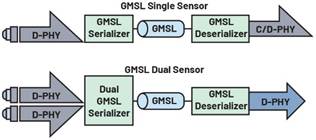
Figure 4. Example GMSL architectures for signal and dual CMOS sensors.
These devices support transmission of uncompressed video, control signals, and power over a single coaxial or STP cable, simplifying system design and reducing connector complexity. A reference image showing single and dual serializer architectures is available on the GMSL technology webpage.
To accelerate development, ADI has partnered with ecosystem providers to offer a variety of evaluation boards, carrier platforms, and camera interface kits. These tools support platforms such as NVIDIA Jetson and Raspberry Pi, and include software stacks, kernel drivers, and diagnostic utilities for rapid prototyping and validation. The list of GMSL ecosystem providers is also available on the GMSL webpage.
For engineers and developers looking to deepen their understanding of GMSL, GMSL University (GMSL U) provides a structured online learning program. It includes foundational courses, implementation examples, and certification tracks tailored to both display and sensor applications. GMSL U is designed to help customers confidently evaluate, design, and deploy GMSL-based systems across medical, industrial, and automotive domains.
Conclusion
As imaging and visualization technologies become increasingly central to surgical and acute care environments, system designers must rethink how video, control, and power are transmitted across compact, sterilization-ready platforms. GMSL technology offers a proven, scalable solution for integrating high-performance cameras and displays into modern medical devices, simplifying design while meeting the demands of bandwidth, reliability, and form factor.
In Part 2 of this series, we will explore the critical role of electrical isolation in medical imaging systems. We’ll examine how isolation can be implemented in GMSL-based architectures to meet IEC 60601-1 requirements without compromising signal integrity or system performance.
References
1“Surgical Robots Market Size, Growth, Share & Trends Analysis.” MarketsandMarkets, December 2025.
2Disposable Endoscopes Market Size, Share & Trends Analysis Report By Application (Bronchoscopy, ENT Endoscopy), By End-use (Hospitals, Clinics), By Region (Europe, North America, APAC), And Segment Forecasts, 2022–2030. Grand View Research, February 2022.

Neil Quinn is a system applications manager at Analog Devices, working within the Smart Hospital Strategy Team. He leads system architecture and prototyping efforts for advanced medical platforms, with a focus on sensor integration, connectivity, and signal processing. Neil holds a bachelor’s degree in electronic engineering from Maynooth University, Ireland. He collaborates closely with industry partners to develop scalable solutions for surgical, therapy, and patient care instrumentation.